
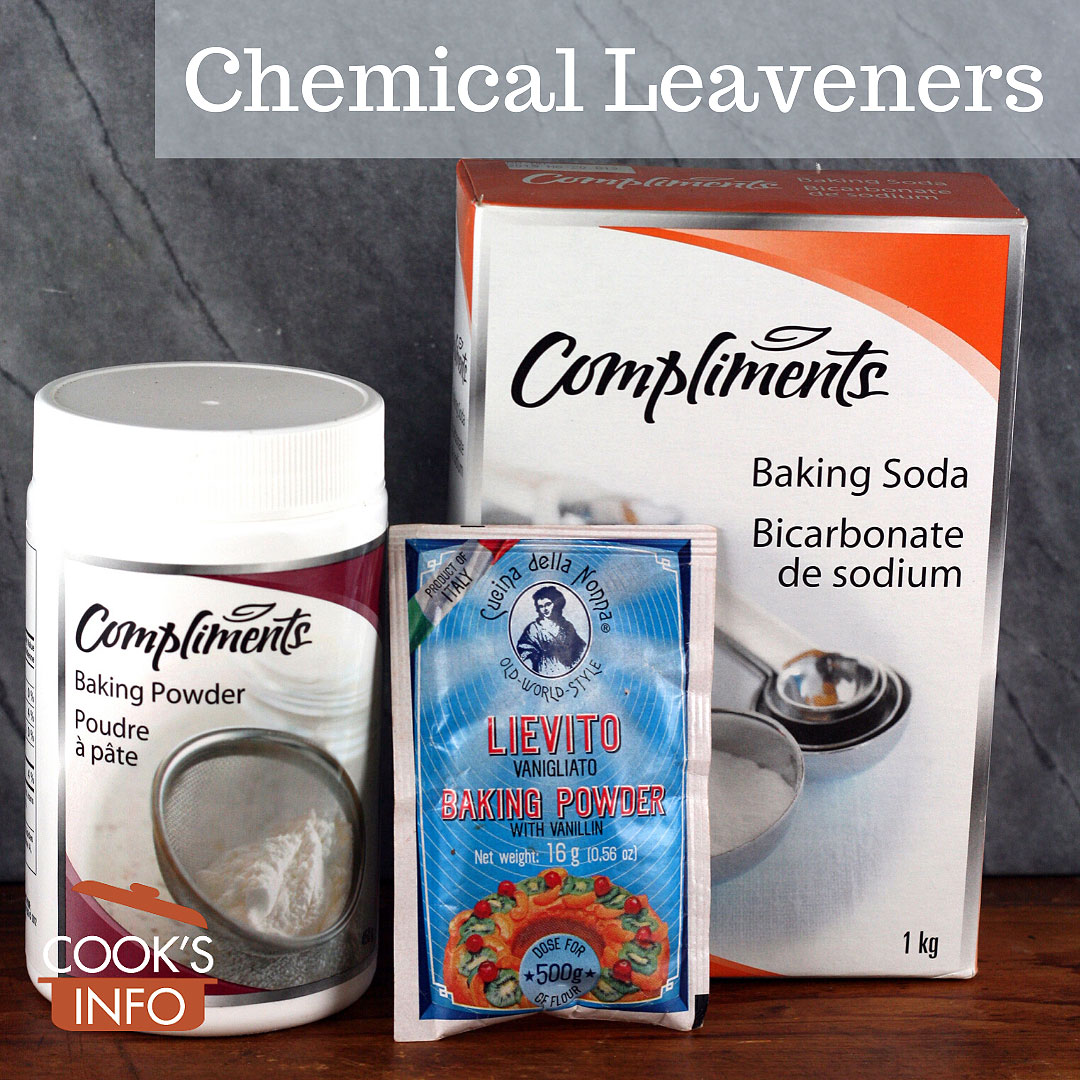
 Chemical leaveners, which came along in the 1800s, revolutionized how people cooked at home. They made possible not only quick breads such as baking powder biscuits, but whole new ranges of baked goods. They were a real time and labour saver at a time when, remember, women had to draw water and shovel coal or chop wood for their cooking needs before they could even start cooking.
Chemical leaveners work based on the combination of alkalines with acids. The chemical reaction releases carbon dioxide, which causes the baked good to rise.
The chemicals referred to are naturally-occurring chemicals and are 100% food-safe.
Baking Powder
Baking Powder
© Denzil Green
Baking powder is baking soda to which an acid and a filler are added. Once you add a liquid, it springs into action and causes chemical leavening of your baked good.
Chemically, baking soda is the "base" (or alkaline) ...
Baking Soda
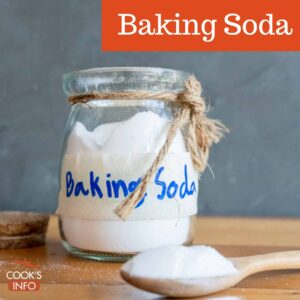
Baking soda is a white, powdery substance used in the kitchen primarily to leaven baked goods.
Cooking Ammonia
Cooking Ammonia is a chemical leavener that was used before the advent of baking soda and baking powder.Cooking Ammonia releases gas fast and gives a quick rise to something baking in the oven. It doesn't need an acid or anything else to react to, the...
Hartshorn (Ammonium bicarbonate)
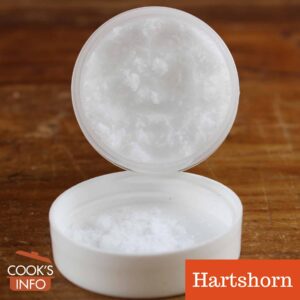
Hartshorn is a chemical leavener for cooking that was used before baking powder and baking soda became available.
It used to be made from the ground-up antlers of a hart (the term for a male deer.) It could also be obtained by distilling hair or decomposed...
Saleratus
Saleratus was a chalk-like powder used as a chemical leavener to produce carbon dioxide gas in dough. It was a precursor to baking soda.
To make it, pearlash (K2 CO3) had carbonic acid added to it, changing the potassium carbonate in it to potassium...
Vanilla Baking Powder
Vanilla Baking Powder
This is baking powder with added vanilla flavouring (actually "vanillin".) It's used in Italy for baked sweet goods, and negates the need to add vanilla separately to a recipe.
It comes in a small ½ oz (16g) sachet, which...