
Koji Yeast is a fermenting aid used in China and Japan in creating products such as miso sauce, soy sauce, sake, shochu, huangjiu, natto, etc.It is a mould with long, dark green spores. [1]A separate species, “Monascus purpureus”, is red The mould creates enzymes which in turn convert long starch molecules in food items such […]
Konakatsuo
Konakatsuo is powdered bonito tuna flakes (“Katsubushi” in Japanese). Cooking Tips It can be used as a seasoning ingredient in recipes, or as a topping sprinkled on dishes being served.
Konjac Root
Konjac Root is a starchy, perennial tuber (actually corm) that grows up to 10 inches (25 cm) wide. Above ground, it has beautiful red flowers. It is rarely actually sold as a whole root in stores or markets. It is usually sold processed into something such as Konnyaku Powder for jelly, or for use as […]
Konnyaku Sashimi
Konnyaku Sashimi is thin green or white slices cut from slabs of Konnyaku jelly. The slices will be about 1 inch (2.5 cm) wide, and about ¼ inch (½ cm) thick. It is sold ready to eat as is, with drops of soy sauce on it, It does not have the smell that Yam Noodles […]
Konpeitou

Konpeitou are candies made in Kyoto, Japan. They are small balls made of sugar about the size of a finger tip. Some describe them as star-shaped, but they are more like small mines, with sugar spikes on them. At the core is a roasted rice kernel. To make Konpeitou, the rice kernels are put in […]
Koromo
Koromo is the Japanese word for the batter used to coat tempura in.
Kosui Pears
A Kosui pear is on the small to medium side for Asian Pears. It has a round shape that looks flattened, like mandarin oranges do. The skin is tender; it will have brown russetting on a background that varies from light green to bronze-brown or bronze-yellow. The taste is very sweet with no tartness; the […]
Kudzu Starch
Kudzu Starch is an expensive starch used in Japan to thicken dishes with, or to coat foods before frying them. You can buy it in chunks, flaked or powdered, and in several grades. The most expensive is the pure, white powder, which is 83% starch. A lesser grade is a slightly-greyish colour, and will be […]
Kuki-Cha Tea
Kuki-Cha Tea is sometimes translated as “stick or twig tea.” It is made from the small twigs and leaf stems that are discarded in the making of other tea such as high grade mat-cha. They are harvested after the last tea harvest, allowed to dry out a bit, then steamed, then roasted 4 separate times […]
Kurobuta Pork
Kurobuta Pork is a Japanese name for a certain quality of pork. All Kurobuta pork comes from Berkshire pigs. That does not mean that meat from all Berkshire pigs, though, qualifies as Kurobata grade. Kurobuta Pork is darker than standard pork, with a richer taste, soft white fat, and good marbling throughout. It is never […]
Maaji Mackerel
A subvariety of Jack Mackerel is called Maaji or “Muroaji” in Japanese. It has horizontal, yellow strips on its sides. It’s considered one of the best tasting species of Japanese Jack Mackerel. They’re fished for year round, but ones caught in the summer are considered the best tasting.
Manju
Manju is a Japanese bun filled with bean paste. They are white, rubbery looking balls with a soft but stretchy texture. They are usually cooked by steaming, but some are baked. Some are sold on sticks. The dough is made from rice flour, wheat flour, or from joyo (yam.) The usual bean paste filling is […]
Mat-cha Tea
Mat-cha Tea is a bright green powdered Japanese tea used in the Japanese tea ceremonies. It does not taste like Westerner’s expect tea to taste like. It has a bitter taste. It is made from leaves that have been shaded for 20 days, like gyokuro. The leaves are harvested, and then steamed, not fermented, and […]
Matsutake Mushrooms
Matsutake Mushrooms grow under pine trees in Asia, in Mexico and even in the Pacific Northwest of North America. In the Pacific Northwest, they grow quantities large enough even to export to Japan, where they are very popular. The mushrooms have short stalks and can be white or brown, with rusty coloured blotches. They are […]
Me-Cha Tea
Me-Cha Tea is made from young tea leaf buds harvested in the spring. It is very astringent and has a bitter aftertaste. The tea is yellowish when made up. Cooking Tips For 3 people: 1 ½ teaspoons of tea to 6 oz / 175 ml water boiled, allowed to cool a bit. Allow to steep […]
Mikan Oranges
Mikan oranges are a variety of mandarin oranges. They have loose skins, and seeds. The oranges range in size from 2 ½ to 3 inches (5 cm to 8 cm.) The tree is frost hardy down to 25 F (4 C.) It blossoms in late April or May. The blossoms are white, with five petals. […]
Mikan Oranges
Mikan oranges are a variety of mandarin oranges. They have loose skins, and seeds. The oranges range in size from 2 ½ to 3 inches (5 cm to 8 cm.) The tree is frost hardy down to 25 F (4 C.) It blossoms in late April or May. The blossoms are white, with five petals. […]
Mioga
Mioga is a member of the ginger family. It has a faint ginger taste. It is a perennial plant that both grows in the wild and is easy to cultivate. It propagates by roots: it does not produce seeds. It dies back above ground during winter. The plant grows 12 to 18 inches (30 to […]
Miso
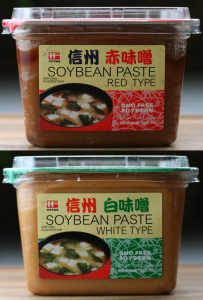
Miso Paste is a savoury, fermented bean paste made in Japan. It can be used as a condiment, or an ingredient in cooking. It is made from a starter culture which will include steamed rice or barley, and then mixed with cooked beans (typically soybeans) and salt. The beans ferment, and the taste produced is […]
Mizuna Salad Leaves
Mizuna, though often called “Mizuna Lettuce”, is not actually a lettuce: it’s a member of the cabbage family. It grows about 10 inches wide (25 cm) and up to 18 inches tall (45 cm.) Its long stalks have crisp, frilly leaves with serrated, saw tooth edges. The plant is very cold hardy. From seed, Mizuna […]
Mochi
Mochi are sticky, chewy Japanese cakes made from pounded, steamed sticky rice (or from sticky rice flour called “Mochiko”, aka Sweet Rice Flour.) They can be savoury or sweet, and may be flavoured. Without any flavouring, they are just bland, rubbery balls. Sweet flavourings include honey, sweet bean paste, and fried banana. More savoury or […]
Monja Yaki
Monja Yaki is a thin Japanese fritter. The thin batter is made from flour moistened with dashi. The batter is poured on the griddle first, then ingredients are added after a short while. Ingredients can include vegetables, and meats such as shrimp or squid, as well as red pickled ginger. History Notes Monja Yaki developed […]
Nagaimo
Nagaimo is a variety of the Japanese yams called “Yamaimo.” This variety growns long and straight, somewhat thick at one end, making it look somewhat like a small baseball bat. It has rough, tan-coloured skin that is a bit hairy. The flesh inside is white. It is starchy, to the point of being mucilaginous; the […]
Nameko Mushrooms
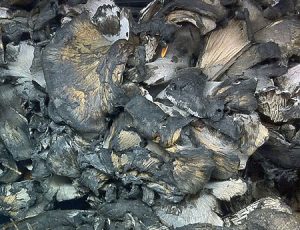
Nameko Mushrooms © Denzil Green Nameko is the second most popular mushroom in Japan after Shiitake. In the wild, it grows on the trunks of dead beech trees. It is also cultivated. Nameko Mushrooms have round caps that will be from ¾ of an inch to 2 inches wide (2 to 5 cm.) Their colour […]
- « Previous Page
- 1
- 2
- 3
- 4
- 5
- 6
- …
- 8
- Next Page »