
Nametake is the Japanese name for the wild version of Enoki Mushrooms. Nametake grow wild in Asia and North America on tree trunks and roots, live or dead. They can survive freezing and thawing and keep on growing. The caps will be 2 to 3 inches wide (5 to 7.5 cm), and instead of being […]
Niboshi
Niboshi is small, dried, crunchy baby fish — both sardines and anchovies are used, though anchovy is more common. They will be 6 to 8 cm long (2 ⅓ to 3 inches) including the tail. To dry them, they are first cooked within two hours at the most of being caught — ideally one hour. […]
Nishime
Nishime is a Japanese dish of braised vegetables that is slowly braised until the liquid has all been evaporated It is served to invalids, and at New Year. You cut vegetables in large chunks. You don’t mix the pieces of vegetable; you put each in its own area at the bottom of the pot. You […]
Nori
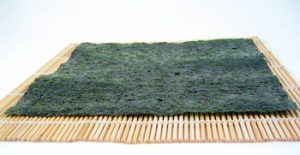
Nori © Denzil Green Nori is the generic Japanese word for seaweed used as a food item. There are actually several different kinds of seaweed that can be used, and the Japanese do indeed distinguish between them, as well as distinguishing based on any processing methods applied to the seaweed. Nori was first harvested from […]
Oden
Oden is a Japanese single “hotpot” dish, whose ingredients may include atsuage, peeled whole boiled eggs, carrots, daikon radish, Kamaboko fish cakes (such as chikuwa), konnyaku chunks, and potatoes. All the ingredients are cut-up bite sized (except for eggs.) They are simmered for hours in a large cermaic pot in a dashi stock that has […]
Okinawan Sweet Potatoes
Okinawan Sweet Potatoes are a variety of sweet potato grown in Japan (they are also grown in Hawaii.) The tops of the plants above ground can be eaten as greens. The actual potatoes have buff skin, darkening when cooked. Inside, the flesh is light purple, turning brilliant purple when cooked. The taste, despite the purple […]
Okonomi Yaki
Okonomi Yaki is a Japanese stuffed savoury pancake. When people say stuffed, they mean either that the other ingredients are folded into the batter, or that other ingredients are put on top the pancake and then more batter spooned on top of them. The other ingredients can be anything from seafood to meat to veg. […]
Okonomiyaki Flour
Okonomiyaki flour is a Japanese flour that contains wheat flour and dried, ground Yamaimo powder in it as an added starch for additional binding power, and flavour. Some brands contain katsuo (powdered bonito) as well. It is used to make okonomiyaki. To the flour, you add your ingredients such as cabbage, egg and water to […]
Oshibori
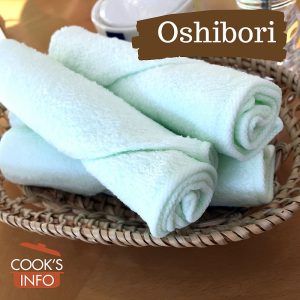
Oshibori are the hot, damp cotton towels that are given to you before a meal on airlines, in Japanese restaurants, and in a few of the more expensive Chinese restaurants, etc. They are for washing your hands at the table.
Panko Crumbs
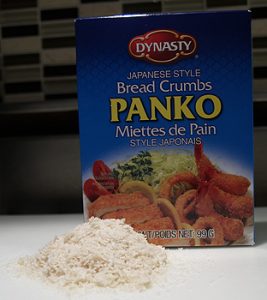
Panko Crumbs are flaky, coarse, dried breadcrumbs that can be used instead of fresh breadcrumbs. One Japanese dish in which they are used is “Tonkatsu”: a deep-fried breaded, boneless pork cutlet. Panko Crumbs are sold in Asian stores in cellophane bags inside boxes. There are many different brands. Cooking Tips Panko Crumbs© Denzil Green Take […]
Plum Vinegar
Plum Vinegar is a Japanese red vinegar with a mild, salty taste and a sour, fruity aroma. It’s not a true vinegar, as there is actually no acetic acid in it. Instead, the acid in it is citric. Plum Vinegar used to be made from the juices created as a by-product of making Umeboshi. Now, […]
Red Ark Shell Clams
Red Ark Shell Clams are a specialty in Japanese cooking, prized as a sushi or sashimi ingredient. They are called “Akagai” in Japanese. Though there are many types of Ark (or “peponita”) clams found throughout the world (at least 200), Akagai in Japanese refers to the type which has not only a red-coloured shell, but […]
Red Kuri Squash
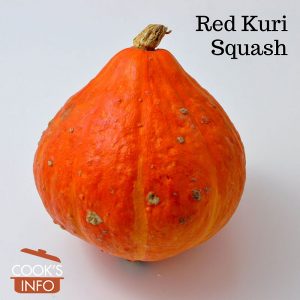
Red Kuri Squash is teardrop-shaped, with a smooth, bright reddish-orange hard rind, with slight ridges. They grow to be about 18 cm (7 inches) wide by 18 cm (7 inches) tall, and weigh 1 ⅓ to 3 kg (3 to 7 pounds.) The plant’s vines reach out to 3 metres (10 feet.) 90 days from […]
Rice Vinegar (aka Rice Wine Vinegar)
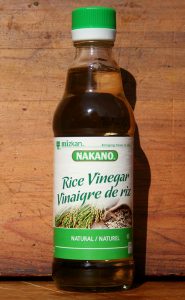
Rice Vinegar (aka Rice Wine Vinegar) is a vinegar made from either fermented rice or from rice wine. There are three different kinds: red, white and black. Red rice vinegar is used as a dip for foods. It has a sweet and sour taste; Black rice vinegar, aka “Jinjiang”, is used in stir-fries and dressings. […]
Sansho
Sansho is a Japanese spice made by grinding the dried leaves of the Japanese Prickly Ash (aka Szechuan Peppercorn) tree. It also applies to the actual Szechuan Peppercorns when ground. Most Szechuan Peppercorns are sold already ground in Japan. The leaves have a bit of a citrus-fruit aroma, and a milder pepper taste than the […]
Sayaka Apples
Sayaka are large-sized apples with bright reddish-pink and orangish skin. They have crisp, very juicy flesh with a tart and sweet taste. Cooking Tips Good for apple sauce and pies. History Notes Sayaka Apples were developed in Japan from a cross between Jonathan and Sekei Ichi apples.
Scallion Sprouts
Scallion Sprouts are the initial shoots of very young Scallions that have just started to grow. The are used in Japanese cooking, both as an ingredient and as a garnish on noodles or soups. They are sometimes used in sushi to balance the smell of raw fish. In Japan, stores sell them in packages. Substitutes […]
Sea Urchin
A Sea Urchin is a small creature that lives on the sea floor. It grows a hard shell with purple-black quills on it. The quills act both as a defence (it is preyed on by Lobsters, Crabs and sea otters), as a means of propulsion, and for trapping algae. Sea Urchins eat algae, barnacles, mussels […]
Seaweed
Seaweed is a plant that is a member of the algae family. It can grow in saltwater and in brackish water. Many types of seaweed are harvested as food, and used in various forms. Seaweed overview Seaweed mostly grows near the shore or on coral reefs. How deep it grows depends on the variety. The […]
Senbei
Senbei are crispy Japanese crackers made from wheat flour and glutinous rice. They come in various flavours including miso and even mayonnaise now. Sometimes they are just brushed with sweetened soy sauce; sometimes they also have a seasoning that includes sesame and salt fish. Sweet ones have sugar in them, and sometimes egg. To make […]
Sencha Tea
Sencha is a Japanese dark-green tea. It’s more of a grade of tea that has been processed a certain way, than a tea from a particular cultivar of tea bush. The flavour, colour and taste will vary based on who has made it and where. For all, though, the leaves will be harvested in the […]
Senshu Apples
Senshu are medium-sized apples with bright-red stripes. Inside, they have off-white, crisp, firm, juicy flesh with a good, sweet flavour. The fruit ripens in early fall. Cooking Tips For fresh-eating. History Notes Senshu Apples were developed in Japan from a cross between Fuji and Toko Apples. Released 1980.
Setsubun
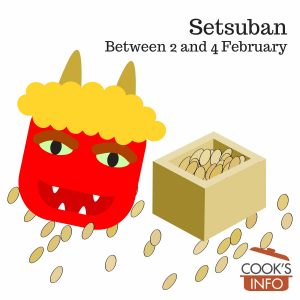
Setsubun is a day in Japan marking the end of winter, and the start of spring. It is observed between the 2nd and 4th of February. Roasted soybeans are thrown to chase away evil spirits and bring good luck.
Shaved Ice
Shaved ice is razor-thin shavings of ice, usually made with a device specially made for the purpose. In North America, shaved ice has been used to create cheap and cold desserts. “Snowballs” or “snowcones” were small paper cones filled with Shaved Ice and drizzled with a flavoured syrup. Popular flavourings over the years have included […]
- « Previous Page
- 1
- …
- 3
- 4
- 5
- 6
- 7
- 8
- Next Page »